
Cooper DappleDaddy ? The fun-maker.
Dad helps Jack bring his ideas to life. He brings warmth and playful making, and always leaves room for Jack’s own choices.

What could we
try, Jack?
Playful hands. An attentive heart.
Dad is playful, creative and close by, always making space for Jack’s ideas and emotions.
Affectionate
Makes sure Jack feels loved and welcome.
Inventive
Helps everyday materials become new possibilities.
Gently funny
Brings warmth and humour while noticing how Jack feels.
Dependable
Stays close and follows through.
Attentive
Pauses to hear what Jack is really saying.
Open to learning
Can change a plan and learn alongside Jack.
Everyone brings something.
Different ideas, big and small, make our family adventures special.
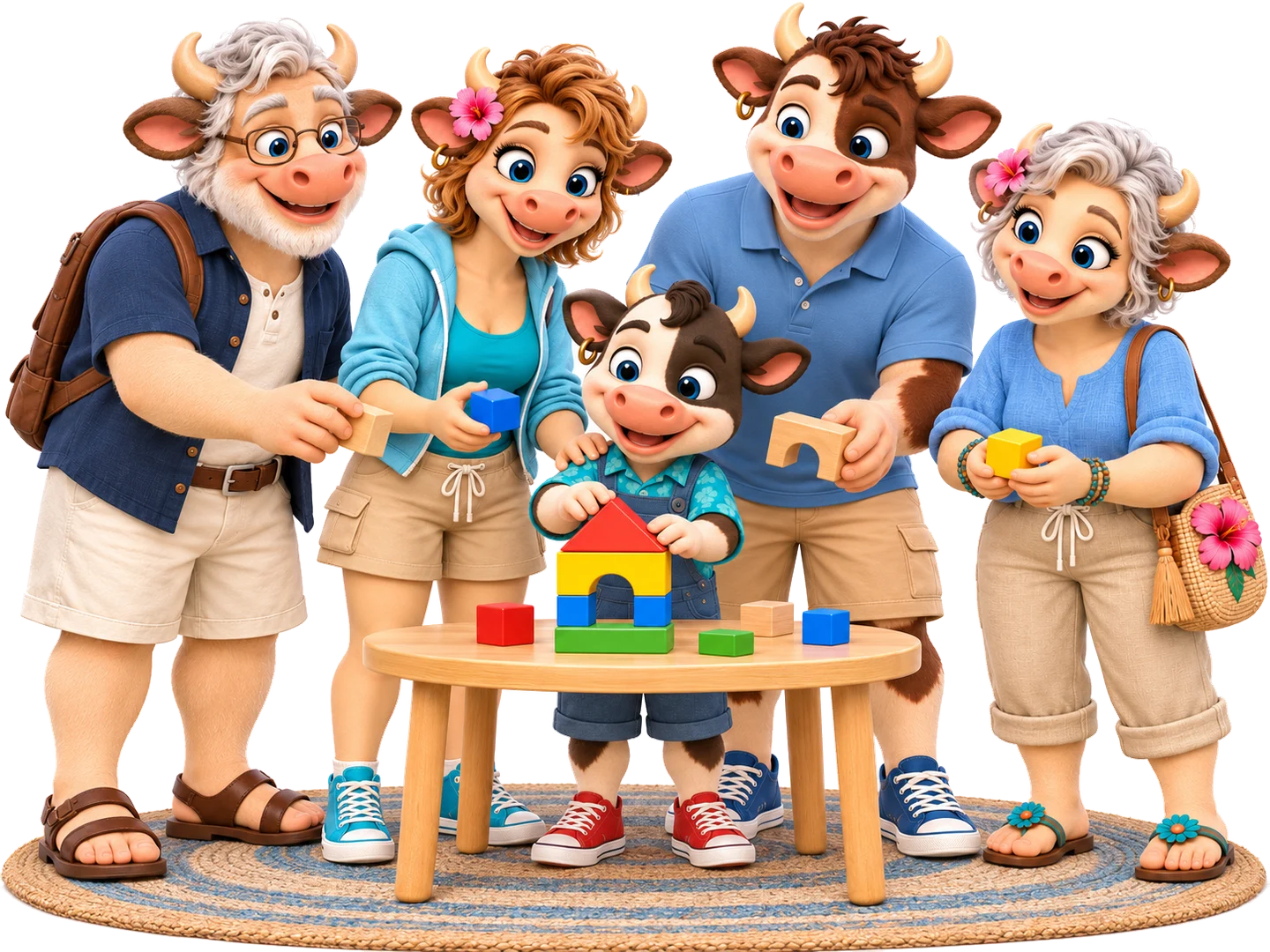
Mom brings discovery
She notices, wonders and invites exploration.
Dad brings making
He helps ideas take shape through playful trying.
Jack brings his own ideas
His choices and imagination lead the adventure.
A little house. A door for Dad.
Jack builds a little cardboard house for a special new idea — making room for Dad.
Jack has a plan
Jack chooses to make a little house and Dad listens to what he wants to build.
Jack has a plan
Jack chooses to make a little house and Dad listens to what he wants to build.
They build together
Dad helps hold the cardboard while Jack chooses where the door will go. There is a part for both of them.
The door is too small
Jack fits through the doorway, but Dad is too big. They pause and notice what needs to change.
Dad offers a choice
They could make the door wider or move one side. Dad gives Jack time to choose an idea to try.
They try the new door
With a little help from Dad, Jack changes the opening. They try again and look at what is different.
Room for Dad
Jack invites Dad into their little house. His idea has made room for them both, and they enjoy what they made together.
Listen first. Make it together.
A simple way Dad and Jack play, create and grow through different ideas.
- 1
Listen
Show Jack’s idea and how he feels.
- 2
Choose
Help him consider the options.
- 3
Make
Try the idea side by side.
- 4
Try again
Notice what could change.
- 5
Reflect
Look at what they learned.
A voice that invites an idea.
Dad uses warm, simple language, honest encouragement and listening.
What could you try together?
Here are some ideas to get started. Use them or follow Jack’s lead with your own.
Make something your way
Try a simple box, blocks or paper creation.
Give your creation a name
Invite an imaginative name and a little story.
Pause and let him lead
Make room for the child’s choices and listen.
The Little Jack’s Father guide.
Practical character guidance for grown-ups, creators and storytellers.
Take a little making inspiration with you.
Get useful notes about Dad’s personality, story approach and practical tips.
Let Jack shape the result
Dad’s job is to help Jack bring his idea to life. Listen, choose a manageable idea, make together, try a change and describe what Jack contributed. Keep the child meaningfully involved.
Let the joke follow the feeling
In The Sock Puppet Waits, Dad’s joke does not cheer Jack up. Dad stops, notices the twisted sock and helps straighten it. Jack chooses when the puppet game begins again. Care comes before continuing the joke.
Show attention in the quieter moments
Get beside Jack, look at what he is making, pause for his suggestion and notice when his mood changes. Use warm adult speech, gentle comic timing and quieter listening when he needs care.
Keep Dad’s familiar identity
The guide calls for the original character model and colours, preserved asymmetric details and no added tail. “Dad” is the proposed consistent dialogue name in the English pilot. Props begin with cushions, boxes and large play objects.
Making at different stages of early childhood
- Ages 2–3: One clear action and a simple choice. Choose a cushion for the doorway.
- Ages 3–4: Compare two approaches. Try a wider opening.
- Ages 4–5: Predict, revise and explain an idea. Suggest a change, then test it.
Turn everyday ideas into play
Start with a box, a cushion or a few blocks. Follow the child’s idea, try a small change and enjoy what you discover together. A warm pause and a useful question can make room for a new possibility.